The Ultimate Flores Phinisi Sailing Route to Komodo National Park
Updated: July 2026
The Ultimate Flores Phinisi Sailing Route to Komodo National Park
- It charts a course through iconic destinations like Padar, Rinca, and Kelor Islands.
- The itinerary features signature wildlife encounters, from trekking with Komodo dragons to snorkeling with giant manta rays.
- It balances rugged exploration with five-star service, including gourmet meals and sublime comfort at sea.
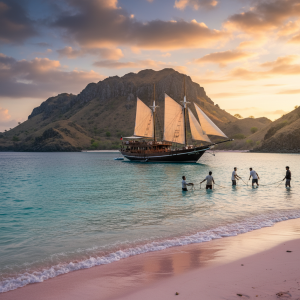
The air hangs thick and warm, a heady mix of salt, clove, and sun-baked teak. From the bow of the Amandira, the sea is a sheet of hammered sapphire, broken only by the silhouettes of volcanic islands that jut from the horizon like ancient, sleeping beasts. We are slipping out of the harbor at Labuan Bajo, the low thrum of the engine a steady heartbeat beneath the deck. This is not merely the start of a vacation; it is the commencement of an expedition, a carefully choreographed dance through one of the planet’s last true wild frontiers. The journey ahead, the quintessential flores phinisi sailing route, is a passage back in time, undertaken with a level of comfort and elegance that belies the ruggedness of the destination. This is the Komodo Archipelago, and there is simply no better way to comprehend its majesty than from the deck of a traditional phinisi.
The Genesis of the Journey: Labuan Bajo and the Phinisi Tradition
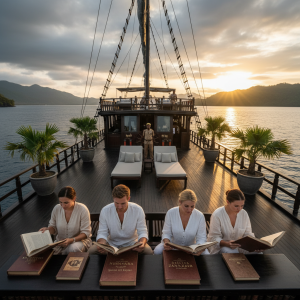
Not long ago, Labuan Bajo was a dusty, one-road fishing outpost on the westernmost tip of Flores. Today, it has transformed into the sophisticated gateway to Komodo National Park, a bustling hub where dive shops and artisan cafes line the main drag. The expansion of Komodo Airport (LBJ) in 2015, now accommodating jets from Jakarta and Bali, catalyzed this change, drawing in a discerning class of traveler. Yet, the soul of the adventure here remains anchored in tradition—specifically, in the magnificent two-masted vessels that fill the bay. The phinisi is a masterpiece of maritime engineering, a sailing ship of the Bugis people of South Sulawesi. Its construction is so culturally significant that it was inscribed on UNESCO’s list of Intangible Cultural Heritage in 2017. As our captain, a seasoned mariner named Adi, explained while overseeing the hoisting of the seven sails, “The phinisi is not just a boat; it’s a living story. Every plank is shaped by hand, every joint fitted without a blueprint, just generations of knowledge.” Modern luxury phinisis, which can range from 30 to over 50 meters in length, now blend this heritage with the amenities of a five-star hotel. Our vessel, for instance, features six air-conditioned suites with en-suite bathrooms, a dedicated spa therapist, and a chef whose culinary prowess would be celebrated in any major capital. This is the core promise of a Flores Phinisi charter: uncompromising access to the wild without sacrificing an ounce of comfort.
Day One: Kelor’s Ascent and the Flying Foxes of Kalong
Our first full day at sea begins with a short, two-hour cruise from Labuan Bajo to Kelor Island. It’s a perfect introduction to the park’s topography. A small, conical island fringed by white sand, Kelor’s main draw is the brief but rewarding trek to its summit. The path is steep, a dusty scramble that takes a mere 15 minutes, but the panoramic reward is immense. From the peak, the view encompasses a 360-degree sweep of turquoise shallows, deep blue channels, and the rugged coastline of Flores itself. After descending, the crystalline water is an irresistible invitation for our first snorkel of the trip. The next stop is Manjarite, a lesser-known snorkeling spot beloved by local guides for its calm, protected waters and a photogenic, dilapidated wooden jetty that stretches over a vibrant reef. Here, schools of sergeant majors and candy-colored wrasse swarm around the pier’s pylons. As the afternoon sun begins to dip, we weigh anchor and set course for Kalong Island. The name translates to “Bat Island,” and the reason becomes spectacularly clear at dusk. As if on cue, the sky ignites with the day’s last light, and a trickle of giant fruit bats emerges from the island’s mangrove forests. This trickle becomes a torrent, a swirling river of thousands upon thousands of creatures, each with a wingspan of up to 1.5 meters, heading to the mainland to forage. It’s a primal, almost gothic spectacle, witnessed from the top deck, cocktail in hand—a moment of profound awe that sets the tone for the days to come.
Day Two: The Triassic Giants of Rinca and the Hues of Padar
Today is about icons. We arrive at Rinca Island early, before the heat of the day intensifies. While neighboring Komodo Island lends its name to the park, our expedition leader, David, a biologist who has spent a decade here, advises that Rinca often provides more reliable dragon sightings. “The population density is higher here, with an estimated 1,300 dragons on an island of just 198 square kilometers,” he notes. We are met on the shore by a park ranger, a solemn man named Stefanus, who carries a long, forked stick—the only defense against a creature whose saliva contains a toxic cocktail of bacteria. The landscape is a starkly beautiful savanna of dried grasses and lontar palms, reminiscent of a prehistoric world. Within minutes, we spot our first dragon, a massive male lazing near the ranger station kitchen, drawn by the scent of cooking. Later, on the trail, we encounter several more in their truly wild habitat. The experience is humbling and deeply respectful of the animals’ space. From the primeval world of Rinca, we sail to the ethereal beauty of Padar Island. The trek to its most famous viewpoint is a well-maintained stone staircase that takes about 40 minutes to ascend. The effort is repaid a thousandfold. The vista from the summit is arguably the most spectacular in all of Indonesia: a sweeping panorama of four crescent bays, each with a different colored sand—one black volcanic, one brilliant white, and one a soft, dusty pink. This is the centerpiece of nearly every luxury Komodo liveaboard itinerary for a reason. We end the day snorkeling at the nearby Pink Beach, or Pantai Merah, where the sand gets its color from crushed red organ pipe coral and foraminifera, microscopic organisms that live on the reef.
Day Three: Manta Point and the Aquatic Kingdom of Taka Makassar
Having explored the terrestrial wonders, our third day is dedicated to the park’s extraordinary marine dimension. The destination is Karang Makassar, more famously known as Manta Point. This is not a reef but a vast, current-swept channel, a cleaning and feeding station for majestic reef manta rays. “The key is to drift,” our divemaster instructs. “We enter the water upstream and let the current carry us. Don’t chase them; let them come to you.” The moment of encounter is pure magic. A dark shape emerges from the blue, resolving into a giant manta with a wingspan of over four meters, soaring through the water with effortless grace. It banks and turns, its cephalic fins unfurled, mouth agape as it filters plankton from the water. We see more than a dozen during our 45-minute drift, a silent ballet of giants. A short cruise from Manta Point brings us to a place that feels like a fantasy: Taka Makassar. It’s a tiny, crescent-shaped sandbar of powdery white sand, surrounded by water of an impossible turquoise hue. We wade ashore, the only people on this sliver of sand in the middle of the sea. The isolation is total. The afternoon is spent at Siaba Besar, often called Turtle Town, a calm bay where we snorkel alongside no fewer than ten green sea turtles as they graze peacefully on seagrass. The sheer abundance and health of the marine ecosystem within the Komodo National Park is its protected status and a powerful reminder of what the ocean should look like.
Curating Your Bespoke Voyage: Beyond the Classic Route
The three-day itinerary covers the undisputed highlights, but the true luxury of a private flores phinisi charter is the freedom to customize. Extending the journey to four, five, or even seven days unlocks the park’s deeper secrets. For the avid trekker, a sunset hike on Gili Lawa Darat offers views that rival Padar with a fraction of the crowds. For divers, the northern sites like Castle Rock and Crystal Rock present top-tier, adrenaline-fueled drift dives with sharks, giant trevallies, and massive schools of fish. A charter allows for spontaneity—if a particular bay is enchanting, you can choose to stay for another day. According to Isabella Marcus, a leading luxury travel consultant specializing in Indonesia, “The vessel is as important as the destination. We now have phinisis with onboard cinemas, wine cellars, and even dedicated yoga instructors. A client recently requested a specific astrophotography expert to join their 10-day trip.” This level of personalization transforms a great trip into a life-defining one. A private charter can cost from $4,000 to over $20,000 per night, reflecting the vessel’s size, age, and level of service. It’s a significant investment, but one that ensures your journey through this UNESCO World Heritage Site is conducted with the utmost exclusivity, safety, and respect for the fragile environment.
Quick FAQ: Navigating Your Flores Phinisi Sailing Route
What is the best time of year to sail Komodo?
The prime sailing season is during the dry months, from April to November. This period offers calm seas, minimal rainfall, and clear skies. The absolute peak season is July and August, so booking well in advance is crucial. The shoulder months of April, May, and October often provide a perfect balance of great weather and fewer boats.
How physically demanding is the trip?
The beauty of a phinisi journey is its adaptability. Activities range from leisurely snorkeling to strenuous hikes. The treks on Padar and Kelor require a moderate level of fitness due to the incline, but they are optional. The crew can always find a calm bay for swimming or relaxing on the deck for those who prefer a more sedentary pace.
Are Komodo dragons dangerous?
Absolutely. They are apex predators and must be treated with extreme caution. All treks on Rinca and Komodo islands are led by certified local rangers who are experts in the dragons’ behavior. They enforce a strict safe distance of at least 5 meters and carry forked sticks to fend off any overly curious individuals. Attacks on tourists are exceedingly rare and almost always the result of visitors not following the rules.
What should I pack for a phinisi trip?
Pack light. You’ll spend most of your time in swimwear and light clothing. Essential items include high-SPF, reef-safe sunscreen, a wide-brimmed hat, polarized sunglasses, and sturdy walking shoes or hiking sandals for the treks. A light jacket or sweater is useful for breezy evenings. While all high-end flores phinisi charters provide snorkeling gear, towels, and toiletries, bringing your own mask if you have one is always a good idea for a perfect fit.
As our phinisi turns back towards Labuan Bajo on the final morning, a pod of dolphins playing in our bow wave, the feeling is not one of an ending, but of a profound shift in perspective. A journey through the Komodo archipelago is more than a checklist of iconic sights; it is an immersion into a world that operates on an older, more elemental rhythm. It is the contrast of the rugged, arid islands with the vibrant life pulsing just beneath the waves; the thrill of seeing a prehistoric reptile followed by the serenity of a deserted beach. The definitive flores phinisi sailing route is not a fixed map but a canvas for your own adventure, a rare opportunity to disconnect entirely and reconnect with something wild and essential. To begin designing your own passage through this prehistoric paradise, explore our fleet of curated charters at Floresphinisi Place.